
Toileting Starts with Access: A Body-First Approach to Support
Updated: Sep 16

Toileting is one of the most complex daily routines children experience.
It asks the body and brain to work together continuously:
noticing internal body signals
interpreting sensations
shifting attention
transitioning away from activities
organizing multiple steps
tolerating sensory experiences
managing clothing and body position
communicating needs
regulating emotions and stress responses
For some children, these systems work together smoothly and consistently. For others, access to these skills may fluctuate depending on nervous system state, sensory load, stress, fatigue, environment, body awareness, or support needs.
This is why toileting is not simply about learning a routine.
It is deeply connected to interoception, regulation, sensory processing, executive function, motor planning, and participation.
Free Toileting Support Handout
Why Some Children Still Poop in Pull-Ups: A Body-First, Interoception-Informed Approach to Toileting Participation
Toileting challenges are rarely just about behavior or motivation. This free guide uses a neuro-affirming perspective and explores how interoception, regulation, sensory processing, and body awareness can influence a child's ability to recognize, tolerate, and respond to internal body signals.
Inside this free guide, you'll discover:
✔ Why some children continue to poop in pull-ups despite being toilet trained for urination
✔ How the From Roots to Fruit™ Integrated Interoception Tree Model explains toileting participation
✔ The role of interoception, regulation, and sensory processing in bowel awareness
✔ Body-first reasons children may avoid the toilet
✔ Practical strategies that reduce pressure while building confidence, participation, and independence
✔ Neurodiversity-affirming approaches that support children with dignity and respect
Download your free copy and begin viewing toileting through a body-first, participation-focused lens.
Toileting Depends on Interoception
Interoception is the body’s ability to notice and interpret internal sensations.
It helps us recognize:
hunger
thirst
body temperature
heart rate
breathing
bladder fullness
bowel sensations
emotional and physical states
Toileting requires children to notice body signals early enough to respond. But interoceptive awareness is not always consistent or accessible.
Some children may:
notice signals very late
feel sensations too intensely
have difficulty interpreting what sensations mean
miss body cues during play or concentration
struggle to transition quickly enough once signals are noticed
Others may experience anxiety, sensory overwhelm, or discomfort connected to bathroom environments themselves.
When we understand toileting through a body-first lens, these experiences make more sense.
Participation Can Change from Day to Day
Many caregivers and professionals notice that toileting success can appear inconsistent.
A child may:
independently use the bathroom one day
need significant support the next
avoid unfamiliar bathrooms
struggle more during periods of stress or transition
experience accidents when overwhelmed, fatigued, or dysregulated
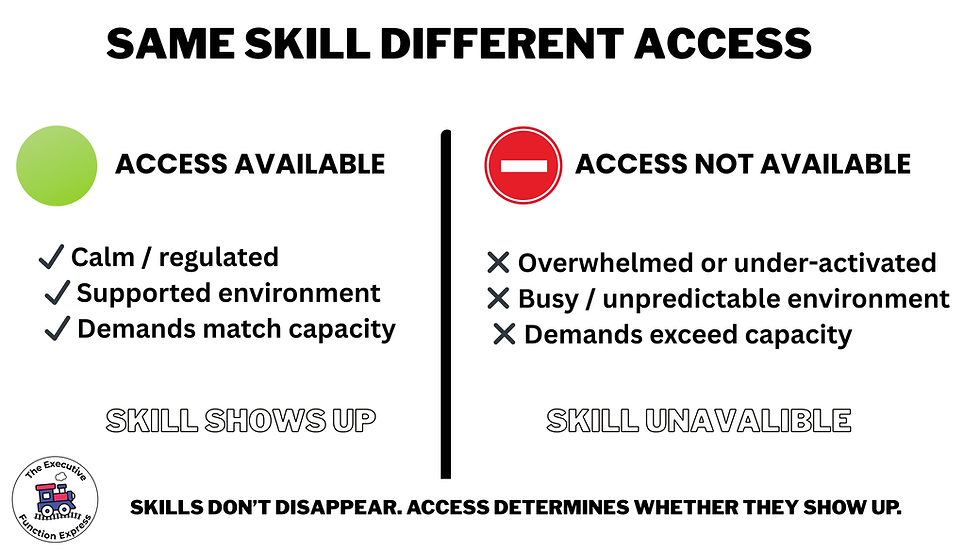
This inconsistency is often connected to access.
Nervous system state changes access to:
body awareness
attention
organization
flexibility
emotional regulation
motor planning
communication
executive function
The same child can have very different levels of access depending on the demands placed on the system in that moment.
When Children Request a Diaper or Pull-Up for Bowel Movements
Some children who are otherwise toilet-trained may still request a diaper or pull-up for bowel movements. This is more common than many people realize.
For some children, bowel movements can feel:
unpredictable
overwhelming
vulnerable
uncomfortable
sensory-intensive
emotionally stressful
A diaper or pull-up may provide:
a sense of safety
familiarity and predictability
additional body feedback or containment
reduced anxiety
support during periods of nervous system overwhelm
Children are not typically making these requests to be difficult or oppositional.
Often, they are communicating that the experience currently feels more accessible with added support.
This can be especially true for children with differences in:
interoception
sensory processing
anxiety regulation
body awareness
motor planning
emotional processing
A body-first approach encourages curiosity about what the child's nervous system may be communicating rather than focusing solely on removing supports. Instead of viewing toileting challenges as negative behavior, it recognizes the roles of regulation, sensory processing, interoception, and access while prioritizing comfort, dignity, and meaningful participation.
Over time, children often build greater comfort, predictability, body awareness, and confidence when support is approached gradually, respectfully, and without shame.
Looking Beneath the Surface
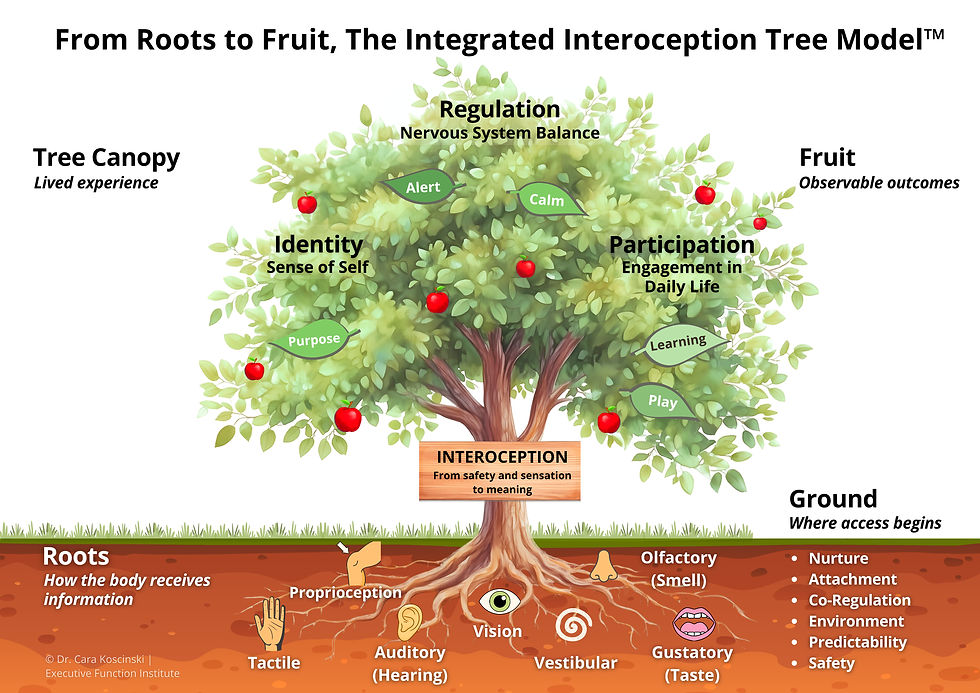
Using the Roots to Fruit, Integrated Interoception Tree Model™, toileting can be viewed as the visible outcome of many deeper systems working together.
The roots of the system include:
sensory processing
movement and posture
body awareness
nervous system regulation
environmental safety and predictability
The trunk represents interoception:
noticing internal sensations
building meaning from body signals
connecting body experiences with action
The visible “fruit” is participation in daily activities, including toileting routines.
When support focuses only on the visible outcome, it can overlook the underlying systems that make participation possible.
Look Beyond What You See

The From Roots to Fruit™ Clinical System helps clinicians connect interoception, regulation, executive function, and behavior to better understand what may be happening beneath the surface.
A Body-First Approach to Toileting Support
A body-first approach begins by supporting regulation, access, and participation rather than focusing only on performance or independence.
Support may include:
creating predictable bathroom routines
reducing sensory overwhelm in bathroom spaces
improving body positioning and stability
using visual supports or sequencing tools
allowing extra transition time
supporting regulation before toileting routines
building interoceptive awareness gradually
honoring communication differences
reducing pressure and shame around accidents or setbacks
The supports are not “extra.”
They are often the bridge that helps participation become more accessible.
Need a Practical Starting Point?
Free Toileting Guide
Learn why toileting challenges often involve more than behavior. Explore practical body-first strategies that support interoception, regulation, and meaningful participation.
Get Your Free Guide.
Support Changes Access
Children are more able to participate when their nervous systems feel supported.
When the body feels safer and more organized, children are often better able to:
notice body cues
transition more smoothly
tolerate discomfort
recover from mistakes
remain engaged in routines
build confidence over time
This does not mean progress is always linear.
Access can change across environments, stress levels, sensory experiences, health, fatigue, growth, and emotional demands.
A neurodiversity-affirming approach recognizes that variability is part of being human.
Moving Beyond Shame and Pressure
Toileting support should protect dignity, safety, and participation.
Children benefit from environments where:
body signals are respected
support is normalized
accidents are met with calm responses
communication is supported in many forms
regulation is prioritized
participation matters more than perfection
When we shift from asking,
“Why aren’t they doing this yet?”
to:
“What might help this feel more accessible?”
we create space for understanding, connection, and meaningful support.
Because toileting does not begin with pressure.
It begins with access.
Continue Exploring Body-First Support
Download the free toileting support handout and explore practical ways to support participation through regulation, interoception, and access.

Dr. Cara Koscinski, OTD, MOT, OTR/L, CAS, is a seasoned pediatric occupational therapist, certified autism specialist, author of seven books, and founder of the Executive Function Institute. Known for her practical, strengths-based approach to neurodiversity, she specializes in helping children build executive function through sensory-aware, visual, and body-based strategies. Creator of The Executive Function Express program and a frequent speaker at national conferences, Dr. Koscinski brings warmth, clarity, and decades of clinical expertise to every tool she creates.
Comments